Guide To Water Pressure Issues In Gowen
If you've noticed your shower feels weak, your washing machine fills slowly, or your faucets sputter and lose pressure, you're dealing with a frustrating problem that affects daily life. Water pressure issues in Gowen and throughout Kent County are more common than you might think, especially for homeowners relying on private well systems. Unlike city water systems that maintain consistent pressure, private wells depend on a complex system of components working together. When something goes wrong, pressure drops dramatically. Understanding what causes water pressure problems helps you know when you can address the issue yourself and when you need professional help. This guide walks you through the most common causes, what you should inspect, and why calling Thompson Well Drilling makes sense for Gowen-area homeowners.
Common Causes of Low Water Pressure in Gowen Wells
Low water pressure rarely appears without reason. Several factors can reduce the flow of water from your well to your home, and identifying the cause is the first step toward fixing it.
Sediment and debris buildup is one of the most frequent culprits. Over time, sand, silt, and mineral deposits accumulate in your well, on the pump intake, or inside your pipes. This buildup gradually restricts water flow, making pressure drop so slowly you might not notice until it becomes severe. Older wells in the Gowen area are particularly susceptible to this problem, especially if they haven't been properly maintained.
Pump problems are another leading cause. Your well pump works constantly to push water from deep underground to your home's pressure tank. As pumps age, they lose efficiency. Bearings wear out, seals fail, and internal components corrode. When your pump isn't working at full capacity, water pressure suffers. Sometimes the pump fails completely, resulting in no water at all.
Pressure tank issues often get overlooked by homeowners. Your pressure tank stores water and maintains consistent pressure throughout your home. Inside the tank, an air bladder helps regulate pressure. If this bladder ruptures or if the air charge drops too low, your system can't maintain adequate pressure. You might notice pressure fluctuating dramatically, or the pump running constantly.
Clogged or failing water filters can drastically reduce pressure. Whole-house filters, sediment filters, and specialized treatment systems all create some resistance to flow. When these filters become saturated with debris, pressure drops noticeably. This is one issue homeowners can sometimes address themselves by replacing filters, but if pressure doesn't improve after replacement, a deeper problem exists.
Pipe issues within your home's plumbing system can also reduce pressure. Mineral deposits accumulate inside older galvanized pipes, gradually narrowing the opening and restricting flow. Corroded pipes may develop pinhole leaks that waste water and reduce pressure. In some cases, frozen pipes in winter or pipes damaged during construction cause problems.
Water pressure issues Specific to Kent County and Montcalm County
The Gowen area sits in a region with unique geological characteristics that influence well performance. Wells in Kent County and Montcalm County often encounter specific challenges.
The water table in this region varies considerably based on soil composition and proximity to groundwater sources. Some wells naturally produce less water volume than others. If your well was drilled in an area with lower water yield, you might experience pressure limitations even with a well-maintained system.
Hard water is prevalent throughout this region. Mineral-rich water deposits scale and sediment more aggressively than soft water. Homeowners in Gowen, Greenville, Cedar Springs, and surrounding areas often deal with mineral buildup that degrades well and pump performance faster than homeowners in other regions.
The clay and silt layers common to this area can shift slightly with seasonal changes, affecting water flow into your well. Spring thaw and heavy rain periods sometimes improve pressure, while dry summers may reduce it.
What You Should Check Before Calling a Professional
Before scheduling a service call, perform these basic checks to identify obvious issues.
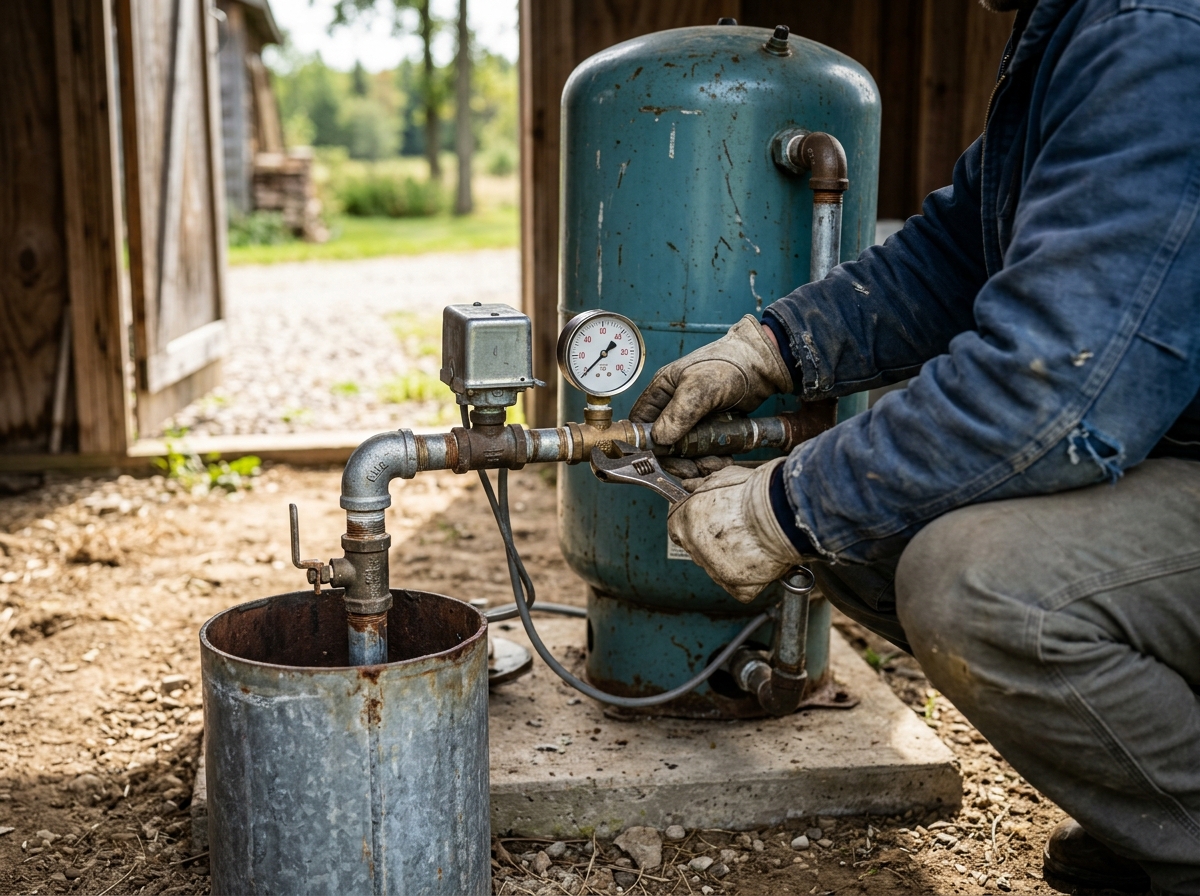
Check your pressure gauge. Most wells have a gauge on the pressure tank showing current system pressure. Normal residential pressure ranges from 40 to 60 PSI. If your gauge reads significantly lower, you've confirmed low pressure. If your gauge is missing or broken, this itself might explain why you haven't noticed the problem sooner.
Listen to your pump. A working pump should cycle on periodically to maintain pressure. If your pump runs constantly without stopping, the pressure tank or pump has a problem. If your pump never runs despite low pressure, the pump has failed.
Inspect visible pipes and connections. Look for obvious leaks, corrosion, or damage. Check that all connections are tight. Sometimes a loose fitting causes pressure loss.
Replace your water filter if you haven't done so recently. This simple step solves pressure problems more often than homeowners expect. Note the pressure before and after replacement to see if improvement occurs.
Check for leaks throughout your home. A hidden leak in your plumbing system or yard can reduce pressure. Look for soft spots in your lawn, wet basement areas, or unusually high water usage.
When to Contact Thompson Well Drilling
Some Water pressure issues require professional diagnosis and repair. Call Thompson Well Drilling when you notice problems that basic troubleshooting doesn't resolve.
If your pressure gauge reads consistently low after you've checked for obvious problems, a professional needs to evaluate your well and pump system. A technician can perform pressure testing, inspect your pump, and determine whether the problem stems from sediment, equipment failure, or something else.
If your pump runs constantly or fails to cycle properly, the pump replacement and repair specialists at Thompson Well Drilling can diagnose the issue. Pump problems often worsen rapidly, so addressing them quickly prevents complete system failure.
If you suspect sediment contamination or your well pressure has declined gradually over years, water well repair and rehabilitation services restore your system. Thompson Well Drilling uses specialized equipment to clean wells, remove sediment, and restore flow.
Why Thompson Well Drilling Solves Gowen Water Pressure Problems
Thompson Well Drilling brings decades of experience serving Gowen, Rockford, Grand Rapids, and surrounding areas throughout Kent County, Montcalm County, and beyond. The team understands the specific geological and water quality challenges affecting wells in this region.
Rather than applying generic solutions, Thompson Well Drilling technicians diagnose the actual cause of your pressure problem. They carry specialized diagnostic equipment and have performed countless well repairs and pump replacements in Gowen and nearby communities. This local expertise means faster, more accurate solutions.
The company offers comprehensive services covering every aspect of well systems. Whether you need water well drilling for a new well, pump replacement for a failing system, or rehabilitation of a sediment-compromised well, Thompson Well Drilling handles it all. This means you're working with one trusted contractor who understands your complete system rather than juggling multiple service providers.
Thompson Well Drilling also provides emergency service for homeowners facing complete water pressure loss. When your well system fails, you need quick response from someone who knows exactly what to do.
Water pressure issues affect your daily comfort and your home's functionality. Rather than accepting weak pressure or dealing with constant pump cycling, take action to identify and solve the problem. Most cases require professional diagnosis because the cause isn't immediately obvious to homeowners. If you're experiencing water pressure problems in Gowen, Rockford, Greenville, Cedar Springs, Lowell, or anywhere else in Kent County or Montcalm County, contact Thompson Well Drilling for a professional evaluation. The team will identify what's causing your pressure problem and recommend the best solution, whether that's pump repair, well rehabilitation, or another service. Don't wait until your system fails completely. Reach out to Thompson Well Drilling today.